
Running a multilingual conference without on-the-day chaos
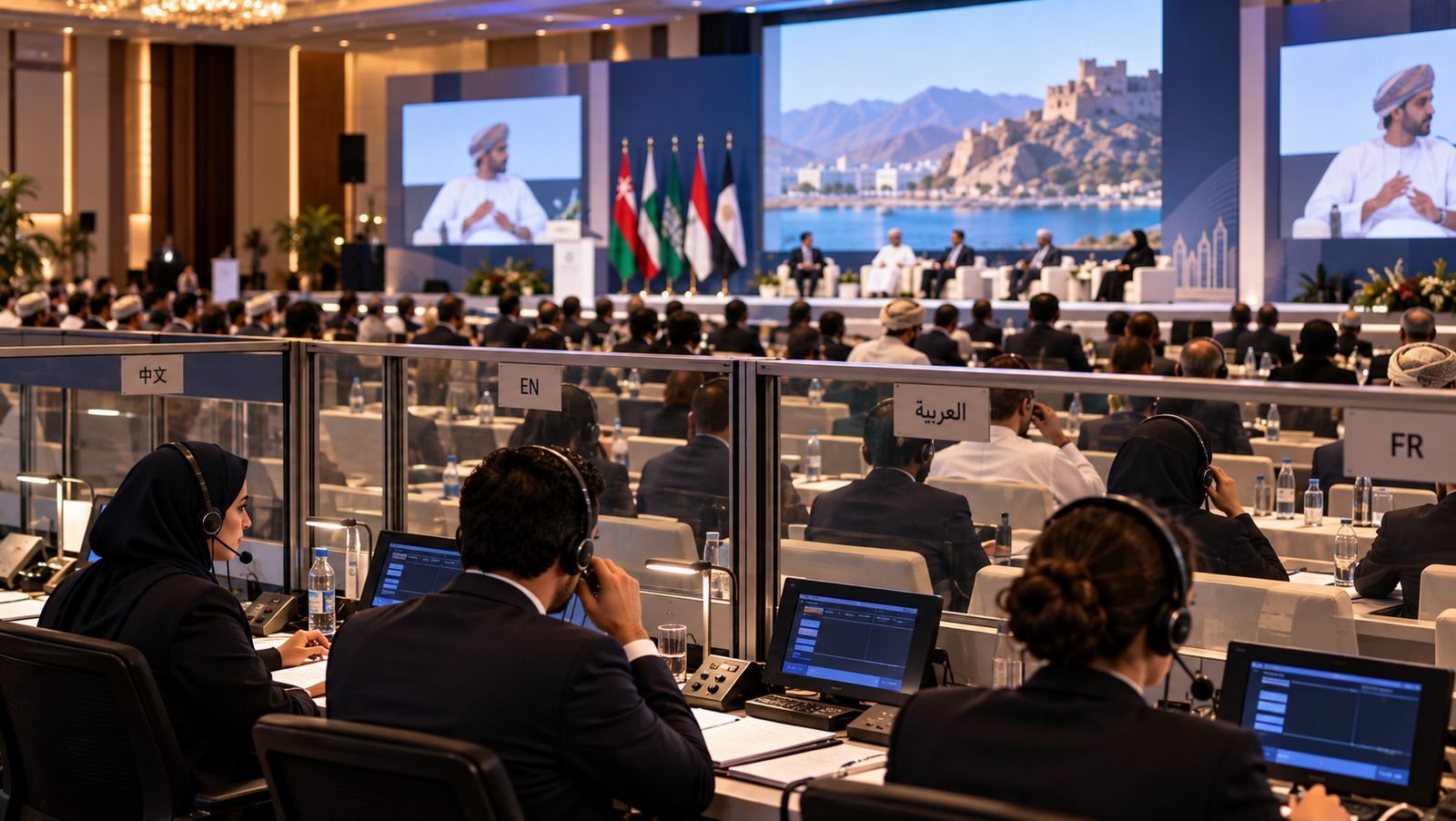
Interpreter numbers, booth audio and early preparation material decide a multilingual event's quality long before delegates arrive.
In short: A multilingual conference depends on a few arrangements booked well before the agenda is final: interpreter numbers and language pairs, booth and audio setup, and preparation material that reaches interpreters in time. Almost anything else can be recovered on the day, but these cannot.
What makes a multilingual event different
A single-language conference has one failure people notice, which is the audio. A bilingual or multilingual event has several, and most stay invisible to the organizer because they happen in a language the organizer does not speak. A delegate listening to a confused rendering of the keynote does not walk over to the AV desk to complain. That delegate simply stops listening.
The three decisions that cannot be rescued late
1. Interpreter numbers and language pairs
Simultaneous interpretation needs two interpreters per language pair per booth, rotating roughly every twenty to thirty minutes. The rotation protects quality, since accuracy degrades measurably beyond that point. A three-language event running two parallel tracks needs more interpreters than most first-time organizers budget for, and the qualified pool for less common pairs is small. Book months ahead.
2. Booths, audio, and receivers
Interpreters need a direct, clean feed from the desk, a clear view of the speaker and the slides, and a booth that meets acoustic standards. Feeding them from a room microphone produces exactly the muddy output that everyone then blames on the interpreters. Count receivers against realistic uptake, and plan a distribution and return process that does not create a queue.
3. Preparation material
Interpreters render meaning in real time, and they cannot do that well with content they are seeing for the first time. Slides, speaker notes, acronyms, names, and the terminology list should reach them at least a week out. Speakers who submit nothing should be told plainly what the consequence will be.
A workable timeline
| When | What |
|---|---|
| 3 to 6 months | Confirm languages, book interpreters, reserve booths and AV |
| 8 weeks | Bilingual delegate communications and registration go live |
| 4 weeks | Signage, badges, and printed material go into translation |
| 2 weeks | Chase speaker decks and build the terminology glossary |
| 1 week | Full pack sent to interpreters; technical rehearsal booked |
| Day before | Booth and audio test with the interpreters present |
The things that go wrong on the day
A nervous speaker reads from a script at 180 words per minute. A panel talks over one another. A video plays with no audio feed to the booths and no subtitles. Someone changes their slides an hour before going on stage. None of this can be avoided entirely, yet all of it is survivable when the chair has been briefed to manage pace and the interpreters already have the deck.
Frequently asked questions
Simultaneous or consecutive interpretation?
Simultaneous for anything with an agenda and a clock. Consecutive doubles the length of every session and suits small meetings and site visits better.
Do remote interpreters work?
Yes, and they perform well with a reliable connection and a proper platform. Remote delivery does not remove the need for two interpreters per pair, or for preparation material.
How many receivers should be ordered?
Plan against realistic uptake and add a margin. Running out is highly visible and cannot be fixed mid-session.
Does printed material need translating too?
Signage, the program, and badges, yes. They shape a delegate's first impression of whether the event was built with them in mind. Full proceedings can often wait until afterwards.
What is the most common budgeting mistake?
Costing one interpreter per language. The resulting figure looks affordable, and the event it pays for starts to degrade after the first half hour.
Working with Bayan Group
Bayan Group manages multilingual events end to end, covering interpreter sourcing, booth and AV specification, delegate material, and on-site coordination. Bayan Translation supplies the linguists and the terminology work. See Services or share the details of your event.